
More than intrusive thoughts.
Many define the obsession of an addict as the persistent, intrusive thoughts or urges related to the use of drugs, alcohol, or other addictive behaviors. This definition was not useful to me at all.
I found my practical explanation to this mysterious phenomenon by happenstance when I was talking with this lady, we got on the recovery topic, she said her son has drinking problem, and then she asked the golden question, “why can’t he just stop?” And it went a little something like this:
I asked her if she drank, and she said what everyone says, “yeah, socially.” I don’t know how many girls I wanted to date in early sobriety who I asked that question to. It turned out, they like to “socialize” a lot.
Anyways, I asked this lady–
How would you feel about it if you couldn’t drink for one year? Only one year of your life. For whatever reason, just for argument’s sake, like if you were on some sort of lifesaving medication that didn’t allow any alcohol. How would you feel about one entire year of sobriety?

But, before you answer, think long and hard about this prospect, because your son surely has. No drinking on your birthday. No sneaking a sip when the ball drops on New Year’s. Christmas parties, Fourth of July, St. Patrick’s Day, Cinco de Mayo—all these holidays, you’re dry. Nervous on a first date, you’re gonna be sober, the entire date, even if it looks like that date could end very well in your bedroom. Each and every graduation party; dinners with people you don’t tolerate well; christening a newly purchased home; bachelor(ette) parties, sporting events, and wedding receptions—even if your own wedding falls in this year—you gotta raise your glass of juice or soda when everyone cheerfully toasts. . . I went on and on about every situation I could think of that non-problem drinkers used for a reason to drink.
And then I said, I know you don’t have a drinking problem. You can control it. You don’t drink too much, and you could easily pass up the party-favors in any one of the scenarios I listed. I know you can do it, but how would you feel about it if you couldn’t use alcohol for one year straight, no cheat days, not one drink?
She said, “holy shit, when you put it that way, it would absolutely suck.”
About a week later I was talking about this exact conversation with a different lady, a Normy herself. And halfway through my rant she stopped me and said that she had actually experienced it. She was on a medication that didn’t allow her to drink for about a year. And she added that it wasn’t just the struggle of no longer having the option to drink, but that her friends, coworkers, and even a family member or two, started treating her differently. That she was no longer getting invited to little shindigs like happy hour after work. People started viewing her more like a goody-two shoes and less trustworthy around their little party, like somehow she would now tattle if they were talking trash about someone. That somehow, she was a threat to their behavior.
Here’s what I figured out about the obsession that helped me greatly.
Even the “normiest” of Normies find the prospect of getting through just one year without drinking alcohol an absurd concept, if not the most socially awkward year of their adult life. It’s not an easy feat, even for someone who think’s they couldn’t care less about alcohol—or drugs and other behaviors for this matter.
The fact remains that this word “obsession” is not solely owned by the addict or the problem-drinker. I came to call it The Great Obsession because, whether it negatively impacts an individual’s life or not—the obsession to use alcohol, or anything else to chemically manipulate moods, is an obsession that is held by the masses.
When I first began revising the contracts I had made with my consumption, I was more than willing to give up my desired effect if it meant that I got to retain my access to something which made me feel normal.
Yes, the euphoric properties of the drug made me feel normal by reducing anxiety, but there was another overlooked aspect to my urges. It was the primal, hardwired need for inclusion.

Alcohol made it easy to weave myself into the social fabric. It let me ease into social circles. It let me bond seamlessly with anyone holding a glass. But when it got to the point where I knew I needed to quit drinking, I was not only faced with the mental cravings and crash-courses on how to cope with daily stressors without the drug, I also needed to heal my shame of being removed from my fellow drinkers, my herd.
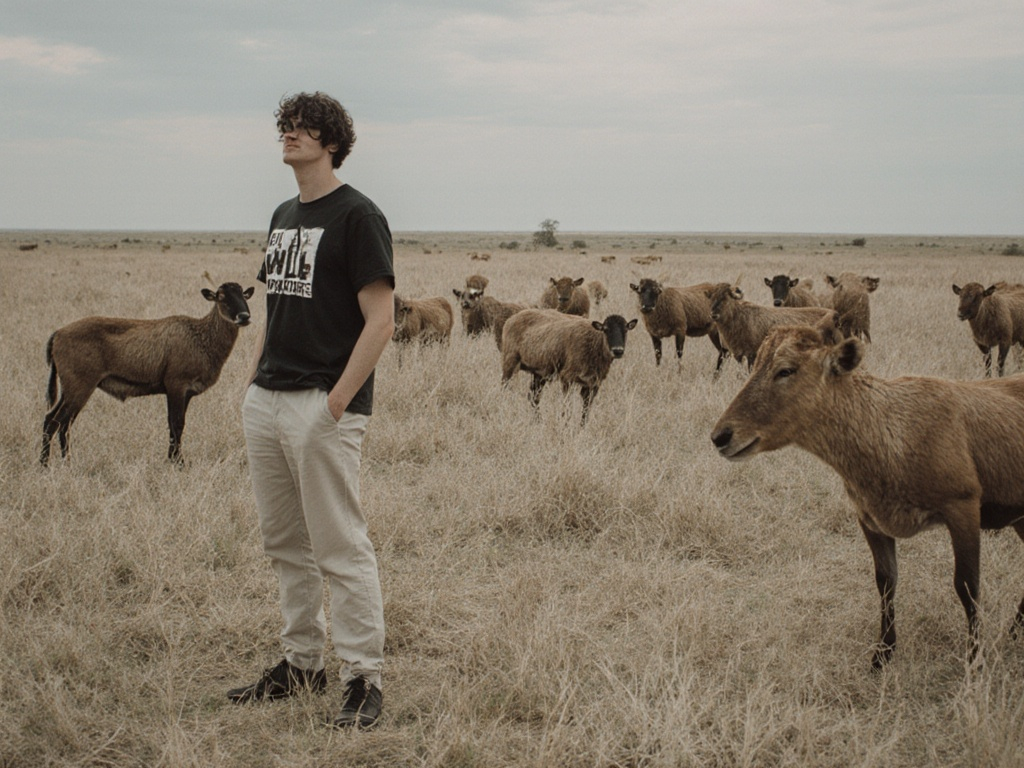
I was threatened with being ostracized and sentenced to roam the land alone. I was simultaneously surrounded by, yet separated from, a herd who could all still enjoy the universal obsession, and I felt passively segregated from a group I had thought of as family; because let’s face it, if I got enough drinks in me, everyone in the room was family.
I’m not trying to disrespect, judge, or hate-on any type of drinker, or any vice someone has, it’s all normal now. I’m simply revealing an aspect of my own recovery that I, and darn near everyone around me, seemed to overlook for far too long. That the obsession for drinking was shared by so many people, not just the Alcoholics, and I felt like a member of a popular group called The Drinkers. When I had to leave this group, it triggered an identity crisis within my already paper-thin shell. An identity crisis I was unaware of for more years of “attempted” sobriety than I care to admit.
I needed to confront a harsh truth. I had to become one of those people I once looked down upon. I had become one of those people I viewed as weak, broken, and cursed. I had a choice, to become one of those people I had dismayed for over a decade or die while trying to hold onto my old ideals with a cast-iron grip which had rusted and seized shut.
You see, even after being sober for a while, it was easy to look across the pasture and miss the old herd. It was easy to long for the automatic connection to anyone holding a drink and the involvement in all the reindeer games and all the exciting stories.
It wasn’t until I found a different herd, a community who had learned how to build and enjoy a life without any need for alcoholic enhancements or crutches. A group of fellows who showed me that we hadn’t been cut-off from the normal people, but were simply forced to escape the same obsession so many unknowingly had. I realized it was okay for me to let go of my obsession for inclusion in what I thought was normal, and it was okay to admit I am different from many—but not all.
Through the teachings and practices of my new herd, I learned to be comfortable with a new norm. And it was this social shift which allowed me to focus on what I truly needed to do to live a better life, instead of looking at what everyone else was doing.
Half of the role of obsession for me was to satisfy a social need that’s ingrained in the hearts of absolutely everybody: to stay with the herd we are most familiar with, identify with, and to not be any more alone than we already feel in this world.
Once I understood this, I could shift my identity, become a part of a new herd, and was the beginning of my life-long project of remodeling my personal social structures, not just the relationships in the sober communities, but in my family and community as well.
Speaking of relationships, I had a relationship with my drug of choice. But just I broke up with my drug use doesn’t mean I didn’t miss it. Learn more about this in the article Happy, Joyous, and Free. (Click the link.)

 root & rise
Leave a comment