I don’t know if any of you have experienced this, but the first thing about my Alcoholism that boggled my mind in early recovery was that I could recover, get my health back, get my life going good again, and then I would test the waters and drank like a Normy (just a couple), and when I followed the rules (after dinner, only on Friday, only 2 or 3), I was just fine. I didn’t get pulled into the bottle that night, and I didn’t experience uncontrollable urges the next morning.
Sometimes following the rules only worked for one or two nights, and sometimes I could do it for weeks or months and it wasn’t a struggle at all. But then out of nowhere, on any given day, I was off to the races and drinking like an open sewer hole in the street during a flood.
You see, at the time, my cure wasn’t abstinence from my drug-of-choice. My goal was to find a way to control it so I could at least participate in the behavior—at least a little. Obviously, an incorrect approach to my problem. Nevertheless, in this quest, I needed to understand why it was that I could control it sometimes and not others.

What I found was that I was not addicted to alcohol, at all. The science behind it is not as important as the concept it explains, but here’s a condensed version of this abnormal reaction I have to this substance.
For those of you who like to throw around the word “Allergy”, but don’t know how to explain it, here you go:
When anyone drinks alcohol, they gulp it, the bloodstream absorbs it, and it floats all around the river and ends up at the liver where it’s converted into a chemical called Acetaldehyde. That’s the poison. The “pick your poison” part of the process. In an Alcoholic metabolism, this happens twice as fast. Double poison.

Stay with me, I’ll make it quick.
Then, this poison floats around the river again and hits the liver for a second round of conversion into a different chemical called Acetate, different inner tube. This is the version that the body expels, kicks out via piss, sweat, and breath. In an Alcoholic, this happens twice as slow when compared to a Normy.

Now the alcoholic has quadruple the amount of poison floating around, drink for drink—but we all know Alcoholics drink more than the Average-Joe. You can do the math. And when this excessive amount of poison hits the Alcoholic brain (you might have heard this is a brain disease) it starts to party and mingle and hooks-up with the neurotransmitters (the mood-modifying brain chemicals), and they make a little devil baby called THIQ (tetrahydroisoquinolines).

Now THIQ is some good shit. It’s actually a high-powered narcotic painkiller. It does the same thing as heroin, morphine, codeine, fentanyl, etc. It fits right into the opiate neuro-receptors specific to opiates like a lock and key. That’s what those boring-ass science videos in treatment were trying to tell me.
The allergy I have to the substance alcohol is that I have the capacity to turn it into an opiate. Like Jesus could turn water into wine, I can turn whine into this high-powered narcotic painkiller when I hit a certain number of drinks. But it’s sneaky as fuck. The abnormal reaction generally begins at drinks 4 or 5.
The misconception I held was that it was like a narcotic, to me, an alcoholic. No, absolutely not! Drinking a pot of coffee is like taking a hit of Meth, but it’s not Meth. Some similar effects, but entirely different molecular structures and physiological mechanisms. When this happens in my alcoholic brain it is the same as any other opiate on a molecular level, it just wasn’t packaged that way on the shelf when I bought it.
A more accurate label on the bottles I bought would have said, “80 proof, 3% heroine”.
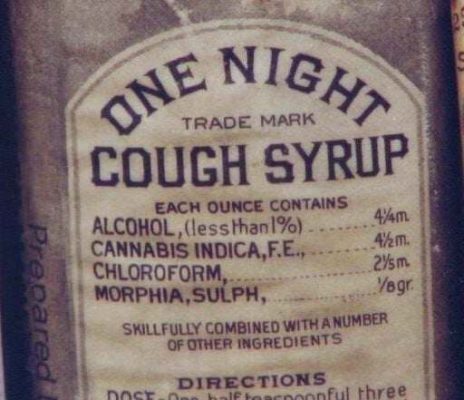
I never viewed it that way. I would look around and see everyone drinking alcohol and being satisfied with the effect of alcohol.
That opiate was my desired effect, not the effect from alcohol. Like I said, I couldn’t care less about the alcohol effect. If that was my desired effect, I would be satisfied with 1 or 2 drinks.
For me, this explained a lot.
First, why I could easily handle a couple when I was testing the water, which led me to believe I could handle more. And when I tried handling more it shifted me into an unstoppable gear.
Also, why Alcoholics seem to easily graduate to the more intense narcotics; and maybe why heroin users and pill poppers might not want to trick themselves into drinking alcohol as a substitute, because they are the exact same thing.
And that the division between recovery programs, like AA and NA, are pure silliness. Eventually, my last sponsor, the one who helped my sobriety stick, was a meth addict. We had absolutely nothing in common, except recovery. Do not limit your recovery options and sponsorship because you identify with a specific tribe.
I wasn’t addicted to alcohol. I was addicted to what my skin-bag of a chemistry lab can turn alcohol into. Two entirely different effects, two entirely different rewards. (Click the link to learn about rewards and cravings.)
Not only does this perspective uncover some of the mystery many alcoholics get confused about when everyone else can drink but the alcoholic can’t: but it’s also the first step in understanding the Obsession for participating in the behavior they observed so many other “non-problem” drinkers enjoying. (Click the link for The Great Obsession.)
 root & rise
Leave a comment